
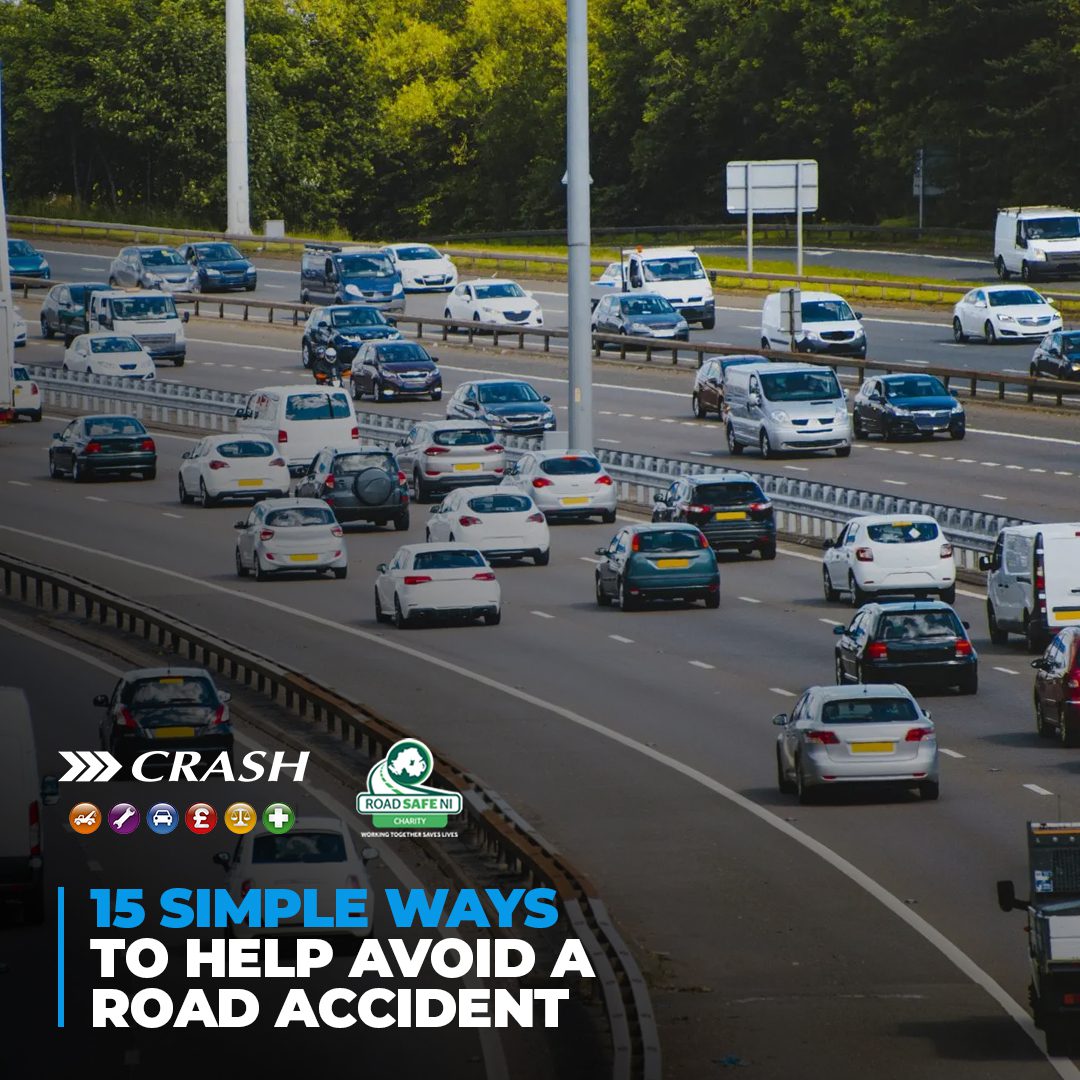
Simple Habits That Can Help Prevent Road Accidents
Road Safety Tips Every Driver Should Know
Whether you’ve just passed your driving test or have decades of experience behind the wheel, road accidents can happen to anyone.
According to PSNI road traffic statistics there were 5,015 injury road traffic collisions recorded in 2025.
There were 7,823 casualties, and 56 road users sadly lost their lives.
In 2025, the most common principal causation factors for all road traffic casualties were ‘inattention or attention diverted’ (1,258 casualties), ‘driving too close’ (900 casualties), and ‘emerging from a minor road without care’ (691 casualties).
While not every accident can be prevented, adopting safer driving habits can significantly reduce your risk of being involved in a collision.
Here are 15 practical road safety tips that can help you stay safer on the road.
1. Slow Down, Look and Listen
Speed and lack of awareness are major contributors to road accidents.
When driving on unfamiliar roads, approaching blind bends, or travelling through rural areas, reduce your speed and remain alert. Regularly check your mirrors and be aware of potential hazards ahead.
Remember: if in doubt, slow down.
2. Watch for Drivers Who Ignore Traffic Lights
Green doesn’t always mean go.
Before proceeding through a junction, take a moment to check for drivers attempting to beat amber or red lights. Looking both ways before entering an intersection could prevent a serious collision.
3. Take Extra Care Around Schools and Residential Areas
Children can be unpredictable around roads.
When driving near schools, parks, or residential streets:
- Reduce your speed
- Watch for children between parked cars
- Be prepared to stop suddenly
- Stay alert during school drop-off and pick-up times
4. Keep Your Vehicle Properly Maintained
A poorly maintained vehicle can become a safety risk.
Regularly check:
- Tyre pressure and tread depth
- Brake performance
- Oil and fluid levels
- Windscreen wipers
- Lights and indicators
Routine servicing can help identify problems before they become dangerous or expensive.
5. Use the 12-Second Rule
Good drivers look ahead.
The 12-second rule encourages drivers to scan the road well ahead for hazards, traffic changes, pedestrians, and obstacles.
The earlier you spot a potential danger, the more time you have to react safely.
6. Always Wear Your Seatbelt
Over the years we’ve all watched the terrifying road safety adverts on TV, like this one, warning us of the dangers of not wearing a seatbelt.
Seatbelts save lives.
Whether you’re travelling a few miles or embarking on a long journey, always ensure every occupant is properly restrained before moving off.
A seatbelt takes seconds to fasten but can make all the difference during a collision.
7. Stick to the Speed Limit
Another advert we’ve watched in horror is this one, urging all Northern Ireland drivers to slow down.
And while it focuses on male drivers, the message applies equally to all genders and ages: speed kills.
Speeding reduces reaction time and increases stopping distances.
Driving within the speed limit gives you more time to respond to changing road conditions, unexpected hazards, and other road users.
Poor weather and heavy traffic are good reasons to drive even slower than the posted limit.
8. Keep Both Hands on the Steering Wheel
Maintaining control of your vehicle is essential.
Road safety experts generally recommend positioning your hands at the 9 o’clock and 3 o’clock positions on the steering wheel. This provides greater control and improves your ability to react quickly if necessary.
9. Use Your Indicators Correctly
Indicators help other road users understand your intentions.
Always signal:
- Before turning
- Before changing lanes
- Before leaving roundabouts
- Before pulling over
Giving other drivers sufficient warning can help prevent avoidable accidents.
And PSNI statistics for 2025 back this up: the second most common cause for KSI (Killed and Seriously Injured) casualties were ‘wrong course/position’.
10. Keep Your Eyes Moving
Good observation is one of the most important driving skills.
Avoid focusing only on the vehicle directly in front of you. Regularly check:
- The road ahead
- Side roads
- Mirrors
- Pedestrians and cyclists
- Potential hazards
Constant observation improves awareness and reaction times.
11. Be Careful of Minor Accidents in Northern Ireland Car Parks
Many low-speed accidents happen in car parks.
When manoeuvring:
- Drive slowly
- Watch for pedestrians
- Check blind spots
- Use your mirrors frequently
- Reverse carefully
Patience in busy car parks can help prevent unnecessary damage and accidents.
12. Avoid Driver Distractions
Distracted driving remains one of the leading causes of road accidents.
To stay focused:
- Put your mobile phone away
- Avoid texting or checking notifications
- Set your sat nav before driving
- Minimise distractions from passengers
Your full attention should always be on the road.
13. Drive Carefully in Bad Weather
Rain, fog, snow, ice, and darkness all increase accident risk.
When conditions deteriorate:
- Slow down
- Increase your following distance
- Use appropriate lights
- Ensure your windscreen is clear
- Avoid sudden braking or steering movements
Driving to the conditions is just as important as obeying speed limits.
14. Never Drive When Tired
Driver fatigue can be as dangerous as driving under the influence.
Signs of tiredness include:
- Frequent yawning
- Difficulty concentrating
- Heavy eyelids
- Missing road signs or exits
If you’re feeling tired, take a break and rest before continuing your journey.
15. Never Assume What Other Drivers Will Do
One of the safest driving habits is expecting the unexpected.
Just because another driver is indicating does not guarantee they will turn. Equally, some drivers may fail to indicate altogether.
Always respond to what vehicles are actually doing rather than what you expect them to do.
Final Thoughts
Road safety starts with good driving habits. By slowing down, staying focused, maintaining your vehicle, and anticipating the actions of others, you can dramatically reduce your chances of being involved in a road traffic accident.
Many collisions are preventable. Making small changes to how you drive today could help keep you, your passengers, and other road users safer tomorrow.
How CRASH Services Can Help You After A Car Crash or Accident
At CRASH Services, we specialise in helping drivers in Belfast, Newry, Derry~Londonderry and across Northern Ireland get back on the road quickly.
After an accident, our expert team will take care of:
- vehicle recovery,
- collision investigation,
- organising repairs,
- providing a replacement vehicle,
- liaising with insurance companies and
- legal and medical
And we do it all, at no cost to the not-at-fault driver.
Our service is free as we recover the costs from the third-party insurers.
Why Choose CRASH Services?
- Established in 1996
- Trusted by Hundreds of Thousands Local Northern Ireland Motorists
- No Cost to You, Costs Recovered from Insurers
- Complete Accident Management from Recovery to Repairs
- 99% Customer Recommendation Rate
Our Mission is Simple:
“To act with care for those involved in road traffic accidents.”
Need Help After an Accident in Belfast, Newry, Derry~Londonderry or anywhere across Northern Ireland?
Call us today on 028 9066 0244 or Request a Callback Today
CRASH Services, take care of everything, at no cost to you!
Frequently Asked Questions
- What is the best way to avoid a road traffic accident?
The best way to reduce your risk of an accident is to stay alert, obey speed limits, avoid distractions, maintain your vehicle properly, and always drive according to road and weather conditions.
- What are the most common causes of road accidents?
Common causes include driver distraction, following too closely, speeding, failing to observe junctions properly, driver fatigue, and poor decision-making in changing road conditions.
- How can I become a more defensive driver?
Defensive driving involves anticipating potential hazards, scanning the road ahead, maintaining safe distances from other vehicles, expecting the unexpected, and avoiding aggressive driving behaviours.
- Why is vehicle maintenance important for road safety?
Poor vehicle maintenance can lead to tyre blowouts, brake failure, reduced visibility, steering issues, and breakdowns. Regular servicing and routine checks help ensure your vehicle remains safe and roadworthy.