
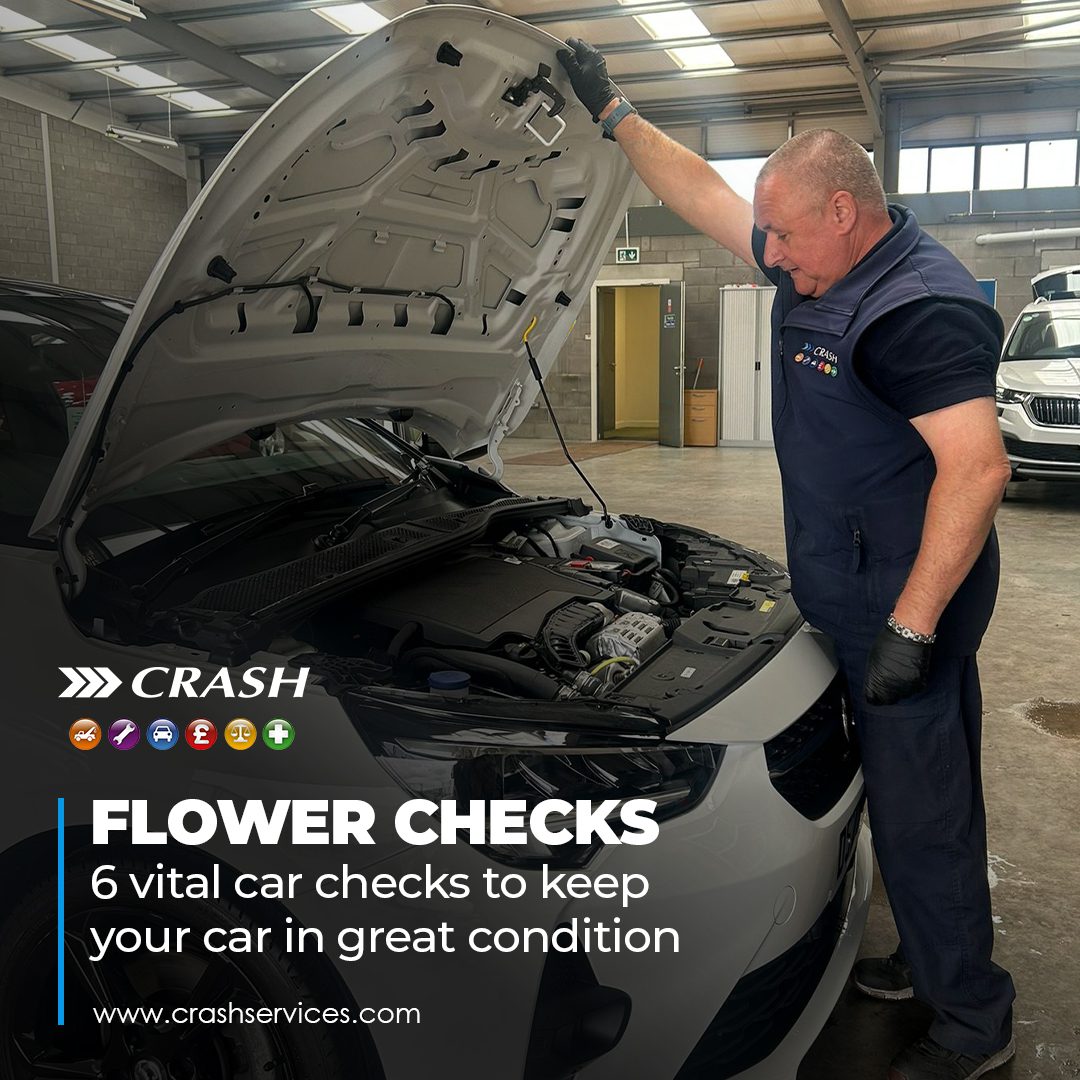
Keep Your Car Safe and Reliable with the FLOWER Method
Easy Vehicle Checks Every Driver Can Do
Some of the most important vehicle safety checks don’t require specialist tools or mechanical knowledge. By spending just a few minutes each week checking your car, you could help prevent breakdowns, improve road safety, and potentially avoid costly repair bills.
As a motorist in Northern Ireland, keeping your vehicle in good condition is essential. Fuel, servicing, MOTs, repairs and replacement parts can all add up, but carrying out regular FLOWER checks can help identify small issues before they become expensive problems.
What Is a FLOWER Check?
The FLOWER Check is a simple vehicle maintenance routine recommended by Granite Breakdown, a division of CRASH Services specialising in vehicle recovery and roadside assistance.
FLOWER stands for:
- F – Fuel
- L – Lights
- O – Oil
- W – Water
- E – Electrics
- R – Rubber
Let’s take a closer look at each one.
F – Fuel
Running out of fuel remains one of the most common reasons motorists require roadside assistance.
Before starting any journey, especially longer trips, check that you have enough fuel to reach your destination and return safely if necessary.
Remember:
- Traffic delays increase fuel consumption.
- Road diversions can add mileage to your journey.
- Cold weather can affect fuel efficiency.
Topping up before a long journey can save you from an unnecessary breakdown.
L – Lights
Vehicle lights play an essential role in keeping you and other road users safe.
They help:
- Illuminate the road ahead.
- Make your vehicle visible to others.
- Signal your intentions when turning or changing direction.
Check all of your lights regularly, including:
- Headlights
- Brake lights
- Indicators
- Tail lights
- Reverse lights
- Fog lights
- Sidelights
Ask a family member or friend to help you test them by standing outside the vehicle while you operate each light.
Faulty lights can create safety risks and may result in a fine if detected by police.
O – Oil
Engine oil is vital for lubricating and protecting moving engine components.
Driving with low oil levels can lead to:
- Increased engine wear
- Reduced performance
- Expensive mechanical repairs
To check your oil:
- Park on level ground.
- Allow the engine to cool.
- Remove the dipstick and wipe it clean.
- Reinsert it fully and remove it again.
- Check that the oil level is between the minimum and maximum marks.
A few minutes spent checking your oil can help avoid costly engine damage.
W – Water
Your vehicle’s cooling system helps prevent the engine from overheating.
Low coolant levels can result in:
- Engine overheating
- Mechanical damage
- Expensive repair bills
Before topping up coolant:
- Allow the engine to cool completely.
- Check coolant levels against the recommended markings.
- Use the correct coolant specified for your vehicle.
Never remove the coolant cap while the engine is hot.
E – Electrics
Modern vehicles rely heavily on electrical systems.
Pay attention to changes in how your vehicle starts and performs.
Warning signs can include:
- Slow engine starting
- Dimming lights
- Dashboard warning lights
- Battery-related alerts
If you notice warning lights on your dashboard, don’t ignore them. Investigating issues early can help prevent larger faults developing later.
R – Rubber
Tyres are one of the most important safety components on your vehicle.
Regularly inspect your tyres for:
- Correct tyre pressure
- Uneven wear
- Cracks or damage
- Embedded objects
- Adequate tread depth
Tyre pressure should be checked at least every three weeks and before any long journey.
According to nidirect, tyres must have at least the legal minimum tread depth of 1.6mm, although more tread is recommended for improved grip and safety.
Don’t forget to check:
- Spare tyres
- Tyre sidewalls
- Windscreen wiper blades
Worn wiper blades can reduce visibility and compromise safety during wet weather.
Don’t Forget: You
The final and perhaps most important check is yourself.
Before every journey ask:
- Am I fit to drive?
- Am I tired?
- Have I consumed alcohol?
- Am I affected by medication?
- Is my eyesight suitable for driving today?
If you’re feeling unwell or fatigued, consider postponing your journey until you feel fit to drive.
Road safety starts with the driver.
Protect Yourself From Unexpected Breakdowns
Regular FLOWER checks can help reduce the risk of breakdowns, improve vehicle reliability, and increase road safety.
For additional peace of mind, Granite Breakdown provides roadside assistance and recovery throughout Northern Ireland and the Republic of Ireland through its trusted recovery network.
You can join our breakdown service Granite Breakdown today for just £80 per year.
They offer one level of cover across Northern Ireland and the Republic of Ireland with a network of trusted recovery operators.
How CRASH Services Can Help You After A Car Crash or Accident
At CRASH Services, we specialise in helping drivers in Belfast, Newry, Derry~Londonderry and across Northern Ireland get back on the road quickly.
After an accident, our expert team will take care of:
- vehicle recovery,
- collision investigation,
- organising repairs,
- providing a replacement vehicle,
- liaising with insurance companies and
- legal and medical
And we do it all, at no cost to the not-at-fault driver.
Our service is free as we recover the costs from the third-party insurers.
Why Choose CRASH Services?
- Established in 1996
- Trusted by Hundreds of Thousands Local Northern Ireland Motorists
- No Cost to You, Costs Recovered from Insurers
- Complete Accident Management from Recovery to Repairs
- 99% Customer Recommendation Rate
Our Mission is Simple:
“To act with care for those involved in road traffic accidents.”
Need Help After an Accident in Belfast, Newry, Derry~Londonderry or anywhere across Northern Ireland?
Call us today on 028 9066 0244 or Request a Callback Today
CRASH Services, take care of everything, at no cost to you!
Frequently Asked Questions
- What does FLOWER stand for?
FLOWER is a simple vehicle safety checklist that helps drivers remember the key areas to inspect regularly:
- F – Fuel
- L – Lights
- O – Oil
- W – Water
- E – Electrics
- R – Rubber
Some drivers also add “You” as a final check to ensure they are fit to drive.
- Why should I carry out a FLOWER check?
Regular FLOWER checks can help:
- Improve road safety
- Prevent breakdowns
- Identify issues early
- Extend vehicle life
- Reduce repair costs
- Improve vehicle reliability
- How often should I perform a FLOWER check?
A quick weekly check is ideal, particularly if you drive regularly. Additional checks are recommended before long journeys or holidays.
- Why is checking fuel important?
Running out of fuel is one of the simplest breakdowns to avoid. Always ensure you have enough fuel for your journey and allow extra for traffic delays, diversions, or unexpected detours.
- Which vehicle lights should I check?
Regularly inspect:
- Headlights
- Indicators
- Brake lights
- Tail lights
- Sidelights
- Reverse lights
- Fog lights
Faulty lights can affect safety and may result in penalties if not repaired.
- How do I check my engine oil?
Park on level ground, allow the engine to cool, remove the dipstick, wipe it clean, reinsert it, then remove it again to check the oil level. The oil should be between the minimum and maximum marks.
- What can happen if my oil level is too low?
Low oil levels can cause excessive engine wear, overheating, poor performance, and potentially serious engine damage that may be expensive to repair.