
What to Do After a Road Traffic Accident in Northern Ireland
What Should You Do After a Car Accident?
If you’ve been involved in a car accident in Northern Ireland, knowing what to do next can help protect your safety, your legal position and your vehicle.
According to the 2025 PSNI Key Statistics Report, there were 5,015 injury road traffic collisions recorded in Northern Ireland last year. These resulted in 7,879 casualties, including 56 fatalities and 1,066 people seriously injured.
Follow these 10 essential steps after a car accident in Northern Ireland.
1. Stay Calm and Assess the Situation
The moments after a collision can be chaotic. Your adrenaline levels may be elevated, making it difficult to think clearly.
Take a few deep breaths and assess the situation carefully. Check yourself and your passengers for injuries before doing anything else.
If it is safe to do so, move away from danger and remain calm while you consider your next steps.
2. Prioritise Safety
Your safety and the safety of others should always come first.
If the vehicles are causing a hazard and can be moved safely, relocate them to a safer area. On busy roads or motorways, move yourself and any passengers away from traffic where possible.
Turn on your hazard lights and remain alert to oncoming vehicles.
3. Keep Communication Calm and Professional
When speaking to the other driver, remain polite, calm, and factual.
Avoid arguments or emotional discussions about who was responsible for the collision. Instead, focus on ensuring everyone is safe and gathering the information you need.
A calm approach helps keep the situation under control and prevents unnecessary disputes.
4. Never Admit Fault
One of the most important things to remember after a car accident is not to admit liability at the scene.
You may not know all the circumstances surrounding the collision, and factors such as witness evidence, dash cam footage, road conditions, or vehicle defects could affect the outcome of any investigation.
Leave liability decisions to insurers, legal representatives, and accident investigators.
5. Contact the Police
If anyone is injured or there are concerns about safety, call 999 immediately.
For non-emergency situations, contact the police via 101 where appropriate.
Having an official accident record can be valuable if questions arise later regarding liability, insurance claims, or vehicle damage.
5. Gather Witness Details
Independent witnesses can play a crucial role following a road traffic accident.
If anyone saw the accident, ask for:
- Full name
- Telephone number
- Email address
- Vehicle registration (if applicable)
If a witness has dash cam footage, politely ask whether they would be willing to share a copy.
6. Exchange Information With the Other Driver
Exchange key details with all drivers involved in the collision.
Record:
- Full name
- Address
- Telephone number
- Vehicle registration number
- Insurance details
- Vehicle make, model, and colour
Accurate information can help prevent delays when dealing with insurers and repair providers.
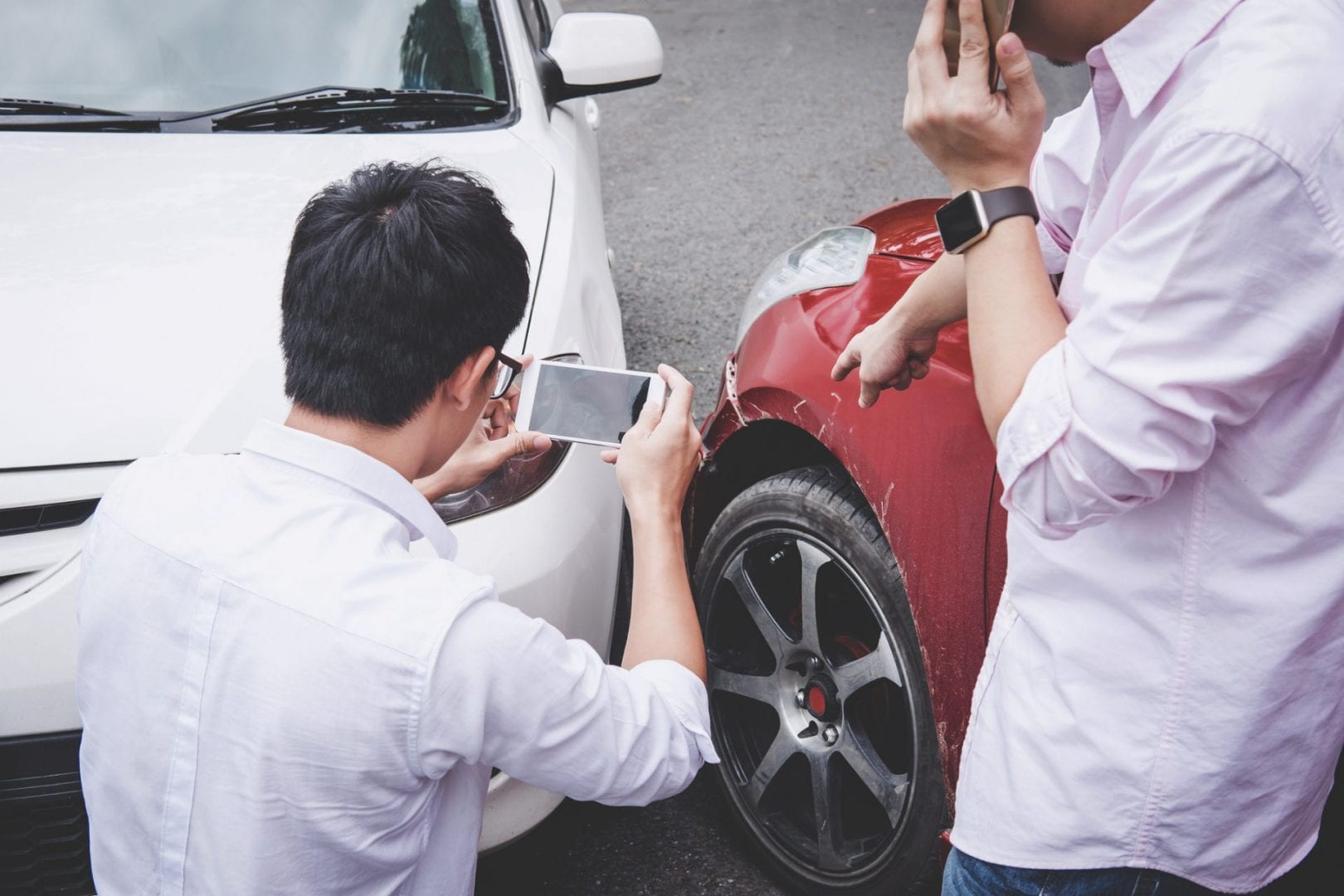
7. Take Photos and Document the Scene
We’re lucky in 2026 to have mobile phones of similar quality to a professional photographer.
After a collision, walk around your car and take as many photographs as you can from different angles.
Then go over to the other vehicle and repeat this exercise.
After taking photos of both cars separately now take several photographs of both vehicles together, capturing the area around the collision too.
Write down in your notes an estimate of your speed before the collision, which direction you were going and general road conditions.
Avoid discussing any details of the collision with the other driver; leave it until the ‘dust settles’ to ascertain what fault, if any, exists on either party.
8. Speak Calmly and Factually to the Police
Photographs provide some of the strongest evidence after an accident.
Take clear pictures of:
- Vehicle damage
- Vehicle positions
- Registration plates
- Road markings
- Traffic signs
- Weather conditions
- Debris or skid marks
You should also make notes about:
- The time and date
- The accident location
- Direction of travel
- Road conditions
- Your recollection of events
The more evidence you gather, the easier it may be to establish what happened.
For more information, read our guide on what evidence to collect after a car accident in Northern Ireland.
9. Call CRASH Services on 028 9066 0244
CRASH are NI’s largest accident management company and can take care of everything after an accident. They can arrange vehicle recovery, collision investigation, organise repairs, provide a replacement vehicle, liaise with insurance companies and offer legal and medical assistance.
CRASH aim to take away the hassle from an accident and get you back on the road as quickly as possible. There is no fee for the accident management service as the costs are recovered from insurers involved.
10. Remember That Accidents Happen
Many people experience feelings of guilt, embarrassment or frustration following an accident.
Remember that accidents happen every day and can affect even the most careful drivers.
Focus on your recovery, follow the correct procedures, and seek the support you need. Taking the right steps after a collision can make a significant difference to the outcome of your claim and your peace of mind.
Download our Free Accident Advice Guide
The guide – ‘Your Rights After a Road Traffic Accident’ – is a valuable 20-page source of information and advice for local motorists.
How CRASH Services Can Help You After A Car Crash or Accident
At CRASH Services, we specialise in helping drivers in Belfast, Newry, Derry~Londonderry and across Northern Ireland get back on the road quickly.
After an accident, our expert team will take care of:
- vehicle recovery,
- collision investigation,
- organising repairs,
- providing a replacement vehicle,
- liaising with insurance companies and
- legal and medical
And we do it all, at no cost to the not-at-fault driver.
Our service is free as we recover the costs from the third-party insurers.
Why Choose CRASH Services?
- Established Reliability: Operating since 1996 (Over 25 years of trusted service)
- Proven Trust: Trusted by Hundreds of Thousands of Local Northern Ireland Motorists.
- No Cost to You, Costs Recovered from Insurers
- Complete Accident Management from Recovery to Repairs
- Exceptional Reliability: 99% Customer Recommendation Rate
Our Mission is Simple:
“To act with care for those involved in road traffic accidents.”
Need Help After an Accident in Belfast, Newry, Derry~Londonderry or anywhere across Northern Ireland?
Call us today on 028 9066 0244 or Request a Callback Today
CRASH Services, take care of everything, at no cost to you!
Frequently Asked Questions
- What should I do immediately after a car accident?
Prioritise safety first. Check for injuries, move to a safe location if possible, contact the emergency services if required, and gather information from everyone involved in the collision.
- Do I need to call the police after a road traffic accident?
If there are injuries, road blockages, concerns for public safety, or legal reporting requirements, you should contact the police. An official record of the collision may also be useful later.
- Should I admit fault at the scene of an accident?
No. It’s best to stick to the facts and avoid admitting fault. Liability is often determined after a full review of the evidence and circumstances surrounding the collision.
- What details should I exchange with the other driver?
You should exchange:
- Full name
- Contact details
- Vehicle registration
- Insurance details
- Vehicle make and model
It’s also useful to note the time, date, and location of the accident.
- Why is it important to gather witness details?
Independent witnesses can provide valuable evidence if there is a later dispute about how the collision occurred. Their observations may help support the facts of the incident.
- Should I take photographs after a collision?
Yes. Take photographs of:
- Vehicle damage
- Vehicle positions
- Road markings
- Traffic signs
- Weather conditions
- The surrounding accident scene
These images may prove useful during any investigation or claim.