How to drive safely in fog
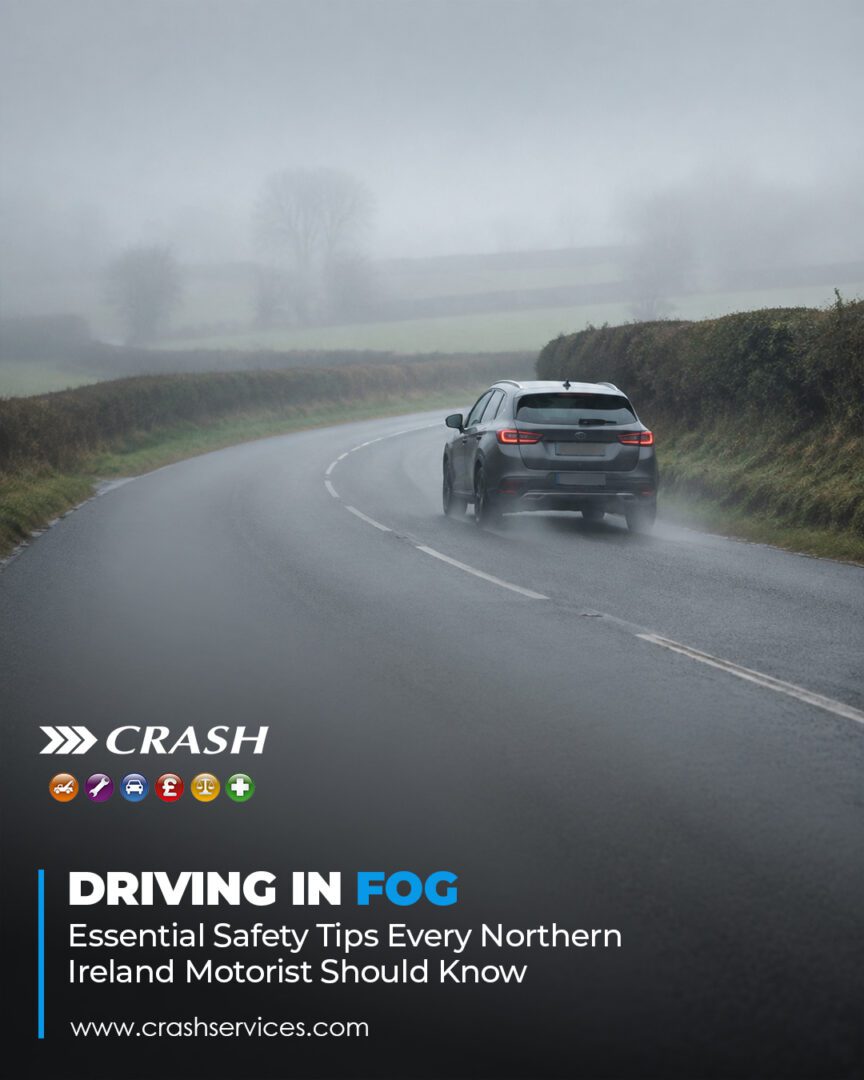
To drive safely in fog, reduce your speed, switch on dipped headlights and fog lights when needed, maintain a greater following distance, avoid sudden manoeuvres, and stay fully focused on the road. If visibility becomes dangerously poor, delay your journey until conditions improve.
Fog may look peaceful from a distance, but it’s one of the most hazardous weather conditions to encounter on the road. Across Northern Ireland’s rural routes, motorways, and low-lying valleys, thick patches of fog can descend rapidly, dramatically reducing visibility, distorting your perception of speed and distance, and significantly increasing the risk of multi-vehicle collisions.
Whether you’re commuting through Belfast, navigating rural country lanes, or heading down the M1, here is our expert guide on how to stay safe when driving through heavy fog.
-
Slow Down When Driving in Fog
Fog creates a deceptive optical illusion that often makes you feel like you are travelling much slower than you actually are. Resist the urge to maintain your usual speed. Reduce your pace and drive cautiously—remember, if you can’t see the road ahead clearly, you need significantly more stopping distance to react to hazards.
-
Use Your Vehicle Lights Correctly
- Use Dipped Headlights: Never drive on full beam in fog. High beams bounce moisture droplets right back at you, creating a blinding white wall of light that worsens visibility.
- Switch on Fog Lights: Make sure to turn on your front and rear fog lights if visibility drops below 100 metres (roughly the length of a football pitch).
- Turn Them Off When It Clears: Remember to switch your fog lights off once visibility improves so you don’t dazzle drivers behind you.
-
Keep a Safe Following Distance
Tailgating is dangerous in any weather, but in thick fog, it can be catastrophic. If the vehicle ahead brakes suddenly, you may not see their brake lights until it is too late. Leave at least a 4-second gap between you and the car in front. If visibility is near zero, increase this distance even further.
-
Avoid Sudden Movements
Make gradual, deliberate changes in direction or speed. Heavy fog robs surrounding motorists of their peripheral awareness, meaning sudden braking, sharp steering, or unannounced lane changes can easily startle other drivers and trigger a rear-end collision.
-
Listen Out at Junctions
If visibility is extremely poor, roll down your driver’s window slightly at junctions and roundabouts. This allows you to listen for oncoming traffic or turning vehicles when you simply cannot see clearly in either direction.
-
Stay Focused & Minimise Distractions
Driving in low visibility requires 100% of your concentration. This is not the time to adjust the radio, fiddle with climate controls, or check your phone. Keep your attention entirely fixed on the road ahead and both hands firmly on the wheel.
-
Consider Delaying Your Journey
If the fog is exceptionally dense and your trip isn’t urgent, the safest option is often to wait it out. Fog frequently rolls in heaviest during early mornings and late evenings, but it can also burn off or shift quickly once the sun rises higher.
What Should You Do After a Non-Fault Accident in Fog?
If you’re involved in a non-fault accident in fog, prioritise safety, move to a safe location if possible, switch on your hazard lights, gather evidence and contact CRASH Services. We can help arrange vehicle recovery, repairs, a replacement vehicle and claims support.
Even with the utmost care, low-visibility accidents can happen. If you find yourself involved in a non-fault accident in the fog:
- Prioritise Safety: Stay calm, switch on your hazard lights, and move your vehicle to a secure place away from live traffic lanes if possible.
- Capture Evidence: If it is safe to do so, take photos of the vehicle damage, the surrounding road, and the weather conditions (such as visibility levels and road signs).
- Call CRASH Services: We will take care of everything from start to finish. Call us today on 028 9066 0244
How CRASH Services Can Help You After A Car Crash or Accident
At CRASH Services, we specialise in helping drivers in Belfast, Newtownabbey, Newry, Derry~Londonderry, Dungannon and across Northern Ireland get back on the road quickly.
After an accident, our expert team will take care of:
- vehicle recovery,
- collision investigation,
- organising repairs,
- providing a replacement vehicle,
- liaising with insurance companies and
- legal and medical
And we do it all, at no cost to the not-at-fault driver.
Our service is free as we recover the costs from the third-party insurers.
Why Choose CRASH Services?
- Established in 1996
- Trusted by Hundreds of Thousands Local Northern Ireland Motorists
- No Cost to You, Costs Recovered from Insurers
- Complete Accident Management from Recovery to Repairs
- 99% Customer Recommendation Rate
Our Mission is Simple:
“To act with care for those involved in road traffic accidents.”
Need Help After an Accident in Belfast, Newtownabbey, Newry, Derry~Londonderry, Dungannon or anywhere across Northern Ireland?
Call us today on 028 9066 0244 or Request a Callback Today
CRASH Services, take care of everything, at no cost to you!
Frequently Asked Questions About Driving in Fog
Can I use full-beam headlights in thick fog? No. Never use full beam headlights in fog. High beams reflect off the moisture droplets in the air, creating a glaring white wall of light that actually reduces your visibility further. Always stick to dipped headlights and fog lights.
How much space should I leave between cars in the fog? You should leave at least a 4-second gap between your vehicle and the car in front of you. If visibility is exceptionally poor or dense, increase this following distance even further to give yourself enough time to react to sudden braking.
What should I do if I am involved in a non-fault accident in the fog? First, ensure you and your passengers are safe, switch on your hazard lights, and move away from live traffic if possible. Once you are safe, call CRASH Services on 028 9066 0244. We will handle everything, from vehicle recovery and repairs to a replacement vehicle and insurance management, at no cost to you.
Is it illegal to drive with fog lights on when it is not foggy? Drivers should switch off their fog lights when visibility improves, as they can dazzle other road users.
What is the safest speed to drive in heavy fog? There is no single safe speed for driving in fog. Motorists should adjust their speed to suit the visibility, road conditions and traffic around them.