
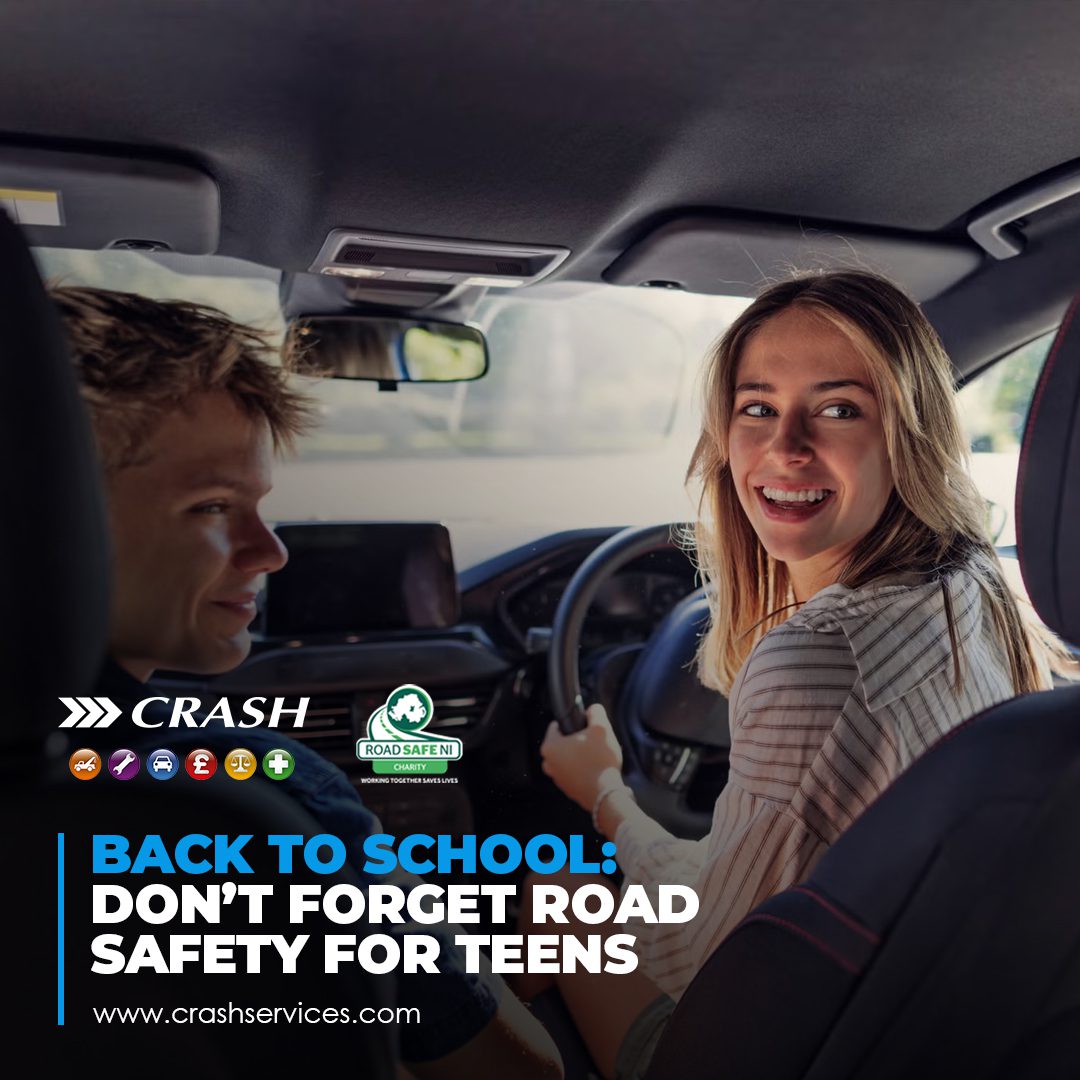
Back to School Road Safety Guide for Teenagers
Independence Is Great. Road Safety Still Comes First
As children become teenagers, they gain more independence and often start making their own journeys to and from school. Whether they’re walking, cycling, catching the bus, or getting lifts from friends and family, they’re spending more time around traffic and making decisions that affect their own safety.
While growing independence is an important part of teenage life, road safety remains essential. As the new school year begins, now is the perfect opportunity to remind teenagers how to stay safe, alert, and responsible when using Northern Ireland’s roads.
1. Phones Down, Eyes Up
One of the biggest dangers facing teenagers on the road is distraction.
Texting, scrolling through social media, watching videos, or listening to music can divert attention away from approaching traffic and road hazards.
Encourage teens to:
- Put their phones away when crossing roads.
- Remove headphones near junctions and crossings.
- Stay alert to surrounding vehicles, cyclists, and pedestrians.
- Avoid multitasking while walking beside busy roads.
A few seconds of distraction can have serious consequences.
2. Never Assume Drivers Can See You
Even at designated crossings, teenagers should never assume drivers have spotted them.
Before crossing:
- Make eye contact with drivers where possible.
- Check traffic in both directions.
- Wait until vehicles have stopped.
- Cross confidently and directly, rather than diagonally.
Being seen is just as important as seeing.
3. Cycle Safely and Responsibly
Cycling offers freedom and independence, but it also comes with responsibilities.
If your teenager cycles to school, make sure they:
- Always wear a properly fitted helmet.
- Use front and rear bike lights.
- Fit reflectors to their bicycle.
- Follow road signs and traffic rules.
- Use clear hand signals when turning.
- Avoid listening to music through headphones while cycling.
A bicycle is a vehicle, and cyclists should always ride responsibly and predictably.
4. Stay Safe Around Buses
School buses and public transport are a routine part of life for many teenagers, but they can present risks if used carelessly.
Remind teens to:
- Stand well back from the kerb while waiting.
- Never run towards a moving bus.
- Avoid stepping out from in front of or behind a bus.
- Wait until the bus has safely moved away before crossing the road.
Good visibility is crucial when buses are involved.
5. Think Carefully About Lifts
As teenagers get older, they may be offered lifts from friends, older students, or newly qualified drivers.
Encourage them to:
- Always wear a seatbelt.
- Refuse lifts if they feel uncomfortable.
- Never travel with a driver who is distracted, reckless, or impaired.
- Trust their instincts if a situation doesn’t feel safe.
Personal safety should always come before peer pressure.
6. Be Visible, Especially During Winter
The school day often starts and finishes during low-light conditions, particularly throughout autumn and winter.
Help your teenager stay visible by encouraging them to:
- Wear bright-coloured clothing where possible.
- Use reflective accessories on coats and bags.
- Choose well-lit routes.
- Cross roads at designated crossing points.
Drivers find it much easier to spot pedestrians who stand out from their surroundings.
7. Know the Risks and Make Smart Choices
Confidence is a positive trait, but it should never lead to complacency on the road.
Teenagers should remember:
- Vehicles can approach faster than expected.
- Weather conditions affect stopping distances.
- Drivers can make mistakes.
- Familiar routes still require attention and caution.
Good road awareness helps prevent accidents and keeps everyone safer.
A Message for Parents
Parents play an important role in helping teenagers develop safe travel habits.
Take time to:
- Discuss safe routes to school.
- Review road safety regularly.
- Lead by example when driving or crossing roads.
- Encourage responsible decision-making.
The habits teenagers develop today can influence how they behave on the roads for years to come.
Safety First This School Year
The return to school brings new opportunities, greater independence, and increased responsibility. Whether travelling on foot, by bike, by bus, or by car, teenagers should always remember that road safety comes first.
A few smart choices every day can help prevent serious accidents and ensure every journey to and from school is a safe one.
How CRASH Services Can Help You After A Car Crash or Accident
At CRASH Services, we specialise in helping drivers in Belfast, Newtownabbey, Newry, Derry~Londonderry and across Northern Ireland get back on the road quickly.
After an accident, our expert team will take care of:
- vehicle recovery,
- collision investigation,
- organising repairs,
- providing a replacement vehicle,
- liaising with insurance companies and
- legal and medical
And we do it all, at no cost to the not-at-fault driver.
Our service is free as we recover the costs from the third-party insurers.
Why Choose CRASH Services?
- Established in 1996
- Trusted by Hundreds of Thousands Local Northern Ireland Motorists
- No Cost to You, Costs Recovered from Insurers
- Complete Accident Management from Recovery to Repairs
- 99% Customer Recommendation Rate
Our Mission is Simple:
“To act with care for those involved in road traffic accidents.”
Need Help After an Accident in Belfast, Newtownabbey, Newry, Derry~Londonderry or anywhere across Northern Ireland?
Call us today on 028 9066 0244 or Request a Callback Today
CRASH Services, take care of everything, at no cost to you!
Frequently Asked Questions
- Why is road safety especially important for teenagers?
As teenagers become more independent and travel without parents, they face new road risks as pedestrians, cyclists, bus users, and passengers. Understanding how to stay alert and make safe decisions is essential.
- Why should teens avoid using phones near roads?
Looking at a phone can distract attention from traffic, crossings, cyclists, and other hazards. Even a few seconds of distraction can increase the risk of an accident.
- Are headphones dangerous when walking near traffic?
They can be. Headphones may reduce awareness of approaching vehicles, emergency sirens, bicycle bells, or warning sounds that could help keep you safe.
- Why is eye contact with drivers important?
Eye contact helps confirm that a driver has seen you. Never assume a driver has noticed you simply because you are near a crossing.
- What is the safest way to cross a road?
The safest approach is to:
- Use designated crossings where possible
- Stop and assess traffic
- Look and listen carefully
- Cross straight across the road
- Avoid running or using distractions