
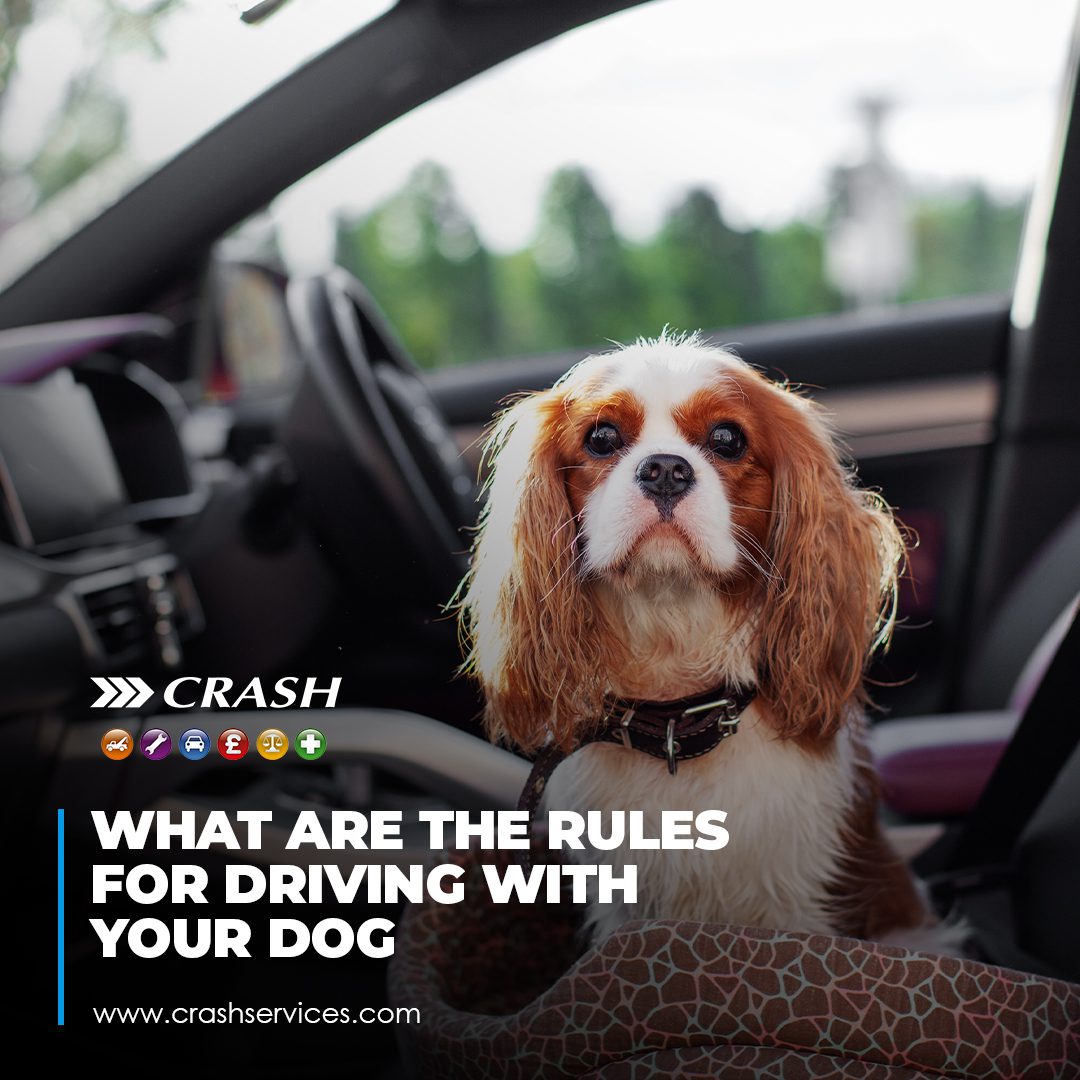
UK Rules for Driving with Dogs Explained
Taking your dog on car journeys can be great fun – but it’s also important to make sure they’re travelling safely and legally. Whether it’s a short trip to the park or a long journey, driving with your dog requires care and the right equipment. Here’s what every pet owner should know to stay safe and compliant with the Highway Code.
What Are the Rules for Driving with Your Dog in the UK?
According to the Highway Code, dogs must be suitably restrained in a vehicle so they cannot distract you or cause injury if you stop suddenly.
If a dog isn’t restrained properly, they could move around the car, block your view, or become a projectile in a collision, putting both of you at risk.
You can safely restrain your dog using one of the following:
- A seat belt harness
- A pet carrier
- A dog cage
- A dog guard for the boot area
These options are all designed to keep your pet secure and minimise distractions while driving.
Where Should Your Dog Sit in the Car?
It’s strongly advised that dogs do not travel in the front passenger seat. Airbags and movement can cause serious injury in the event of an accident.
Instead, dogs should travel:
- In the back seat, safely restrained with a harness or carrier
- Or in the boot, if suitable and fitted with a dog guard or crate
This ensures both safety and comfort for your pet and keeps your attention fully on the road.
What Happens If Your Dog Isn’t Restrained?
Failing to restrain your dog properly could lead to serious consequences. You could be charged with ‘careless and inconsiderate driving’, which can result in:
- Penalty points on your licence, and
- A fine of up to £5,000
Even if an accident doesn’t occur, driving with an unrestrained dog may void your insurance if a claim is made.
Safety and Comfort Tips for Travelling with Dogs
To keep your pet both safe and happy on the road:
- Choose a safety restraint that fits your dog’s size and breed.
- Make sure carriers and cages are large enough for comfort and ventilation.
- Use a blanket or seat cover under harnesses to protect your seats and help your dog relax.
- Plan rest stops on long journeys – let your dog stretch, hydrate, and relieve themselves.
- Bring a favourite toy or chew to keep them calm and entertained.
A relaxed dog is less likely to fidget or cause distractions, helping ensure a smooth and safe journey for everyone.
How CRASH Services Can Help You After A Car Crash or Accident
At CRASH Services, we specialise in helping drivers in Belfast, Newry, Derry~Londonderry and across Northern Ireland get back on the road quickly.
After an accident, our expert team will take care of:
- vehicle recovery,
- collision investigation,
- organising repairs,
- providing a replacement vehicle,
- liaising with insurance companies and
- legal and medical
And we do it all, at no cost to the not-at-fault driver.
Our service is free as we recover the costs from the third-party insurers.
Why Choose CRASH Services?
- Established in 1996
- Trusted by Hundreds of Thousands Local Northern Ireland Motorists
- No Cost to You, Costs Recovered from Insurers
- Complete Accident Management from Recovery to Repairs
- 99% Customer Recommendation Rate
Our Mission is Simple:
“To act with care for those involved in road traffic accidents.”
Need Help After an Accident in Belfast, Newry, Derry~Londonderry or anywhere across Northern Ireland?
Call us today on 028 9066 0244 or Request a Callback Today
CRASH Services, take care of everything, at no cost to you!
Frequently Asked Questions
- Is it legal to drive with a dog in the car?
Yes, but under the UK Highway Code, dogs and other animals should be suitably restrained so they cannot distract the driver or cause injury during sudden braking or a collision.
- How should I restrain my dog while travelling?
Suitable restraint options include:
- A dog seat belt harness
- A pet carrier
- A travel crate or cage
- A dog guard fitted to the boot area
The method you choose should be appropriate for your dog’s size and breed.
- Why does my dog need to be restrained?
An unrestrained dog can:
- Distract the driver
- Interfere with vehicle controls
- Obstruct visibility
- Be seriously injured in a collision
- Injure other occupants during sudden braking
- Can my dog sit on my lap while I’m driving?
No. Allowing a dog to sit on your lap while driving is extremely dangerous and can significantly affect your ability to control the vehicle safely.
- Is the front passenger seat safe for dogs?
It’s generally safer for dogs to travel in the rear of the vehicle. Front passenger seats can pose additional risks, particularly due to airbag deployment during a collision.
- Where is the safest place for a dog to travel?
Depending on the vehicle and restraint system, the safest options are usually:
- The rear seats using an approved harness
- A secured crate
- The boot area with an appropriate dog guard or travel crate
- Can I be fined for driving with an unrestrained dog?
Failure to keep proper control of your vehicle due to an unrestrained dog could lead to penalties, fines, and enforcement action if it contributes to careless or inconsiderate driving.