What Happens If You Hit an Animal While Driving?
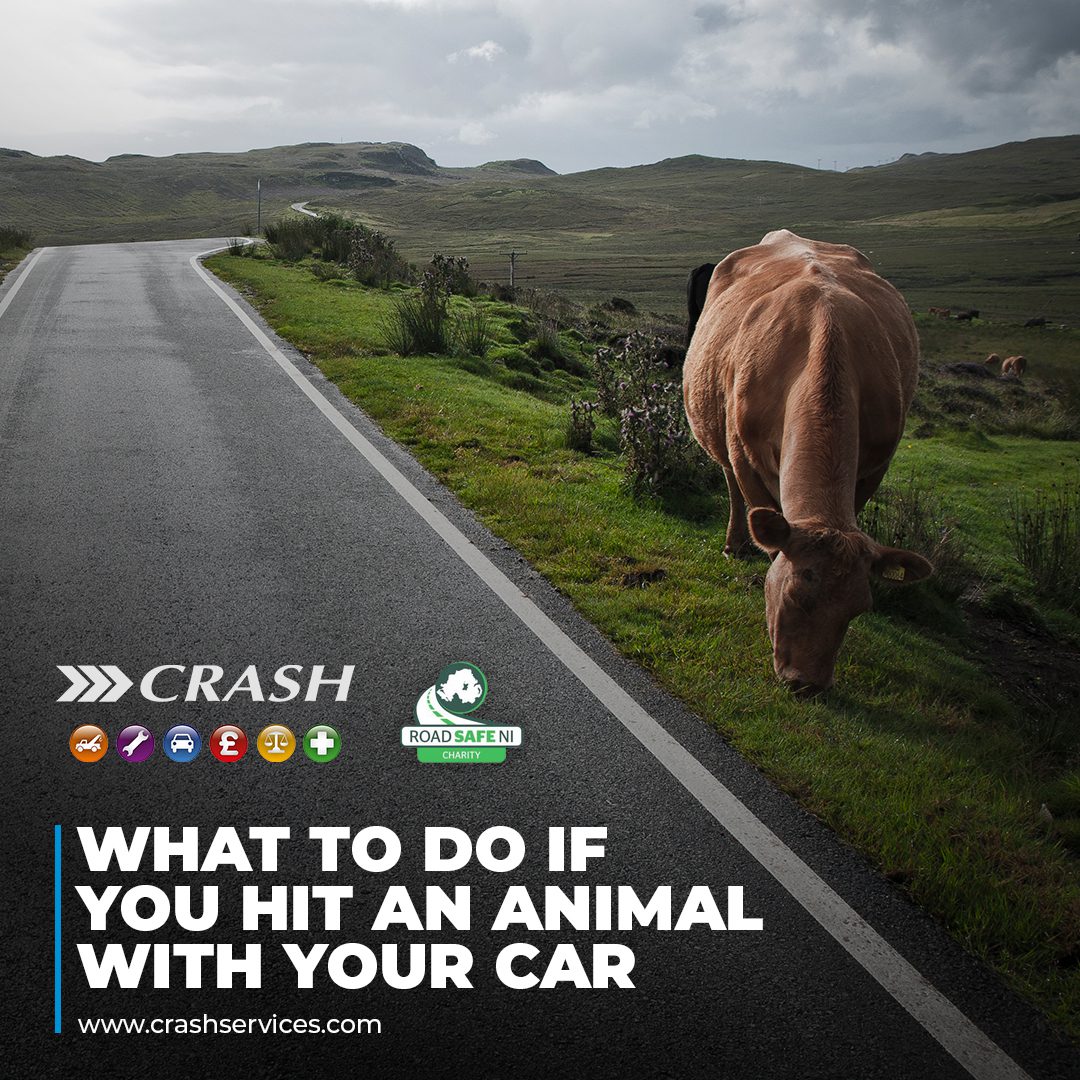
Car accidents involving animals are, unfortunately, a common occurrence across Northern Ireland – in both rural and residential areas. These incidents not only endanger drivers and passengers but also create confusion about what motorists are legally required to do afterwards.
To help, we’ve put together a simple guide on what to do if you accidentally hit an animal while driving, including when to report it and how to stay safe.
How Common Are Animal-Related Car Accidents in Northern Ireland?
Animal-related road accidents can happen at any time and in any location – particularly on country roads and during early morning or late evening when animals are most active.
According to the PSNI’s 2023 road safety report, there were 23 car accidents caused by an animal on the carriageway (excluding dogs). Smaller animals such as badgers, foxes, and domestic pets are often involved too, frequently darting into the road unexpectedly.
What to Do Immediately After Hitting an Animal
If you hit an animal while driving, stay calm and follow these steps carefully:
- Prioritise Safety
Pull over to a safe location, switch on your hazard lights, and assess the situation. Avoid sudden stops or stepping into traffic.
- Check for Injuries
Ensure all passengers are safe. Administer first aid if necessary and call 999 in the event of serious injury.
- Assess the Animal
Approach with caution – injured animals can be unpredictable and dangerous.
- If the animal poses a risk, stay in your car and contact animal welfare or the PSNI.
- Check for collars or tags – domestic pets often carry identification.
- Farm animals will usually have ear tags showing their registered keeper.
- Report the Incident to the PSNI
You may need to report the accident depending on the type of animal involved (see below for details).
- Inspect Your Vehicle for Damage
Note your exact location, point of impact, and visible damage to your vehicle.
- Check the Surroundings
Look for open gates, broken fencing, or gaps in hedging, which could help establish whether an animal escaped due to owner negligence.
- Take Photographs
If it’s safe, take clear photos of:
- Your vehicle damage
- The animal and any identifying tags
- The accident location, including road signs and nearby property
- Any relevant evidence, such as open gates or broken fences
Do You Need to Report Hitting an Animal?
Under the Road Traffic Act 1988, you are legally required to report accidents involving certain animals by calling 101 as soon as it’s safe to do so.
You must report if you hit any of the following:
- Dogs
- Horses
- Cattle
- Pigs
- Goats
- Sheep
- Donkeys or mules
What If You Hit a Cat?
While hitting a cat does not carry the same legal reporting obligation, it is considered good practice to:
- Inform the owner if they can be identified, or
- Contact your local council’s animal welfare department via NI Direct to report the incident.
What If You Hit a Wild Animal?
You do not need to report collisions involving wild animals (e.g. deer, foxes, badgers). However, you should still:
- Notify the local council or animal rescue services, especially if the animal is injured.
- Report carcasses on the road to help prevent further accidents.
Who Is Responsible for Hitting an Animal?
Liability depends on the type of animal and circumstances of the collision:
- Wild Animals: Drivers are usually not held liable unless negligence (e.g. speeding or distracted driving) can be proven.
- Domestic Animals: The owner may be liable if the animal was not properly restrained or escaped due to negligence.
- Livestock: In rural areas, farmers are typically responsible for ensuring animals are securely fenced. If fencing is inadequate, the owner could be held accountable.
Does Car Insurance Cover Hitting an Animal?
Most insurance policies will consider animal collisions under comprehensive cover. In some cases, the animal’s owner’s insurance may cover third-party damages – especially for livestock or domestic pets.
For animals classified as “dangerous,” strict liability may apply, meaning negligence does not need to be proven for a claim.
If you’re unsure, contact your insurer immediately after the accident with details and evidence gathered at the scene.
Tips to Avoid Hitting Animals on the Road
To reduce the risk of animal-related accidents:
-Stay alert in rural or wooded areas, particularly during dawn and dusk.
-Drive cautiously where wildlife warning signs are displayed.
-Use high beams at night when safe, but dip them if animals are nearby to avoid startling them.
-Avoid sounding your horn or revving your engine around animals.
-Keep speeds low on bends, narrow roads, and rural lanes.
-If livestock block the road, stop, turn off your engine, and wait until it’s safe to pass.
Final Thoughts
Accidents involving animals can happen even to the most careful drivers. The key is to stay calm, act safely, and follow the correct reporting steps. By knowing your responsibilities, you help protect yourself, other road users, and animals across Northern Ireland.
How CRASH Services Can Help You After A Car Crash or Accident
At CRASH Services, we specialise in helping drivers in Belfast, Newry, Derry~Londonderry and across Northern Ireland get back on the road quickly.
After an accident, our expert team will take care of:
- vehicle recovery,
- collision investigation,
- organising repairs,
- providing a replacement vehicle,
- liaising with insurance companies and
- legal and medical
And we do it all, at no cost to the not-at-fault driver.
Our service is free as we recover the costs from the third-party insurers.
Why Choose CRASH Services?
- Established in 1996
- Trusted by Hundreds of Thousands Local Northern Ireland Motorists
- No Cost to You, Costs Recovered from Insurers
- Complete Accident Management from Recovery to Repairs
- 99% Customer Recommendation Rate
Our Mission is Simple:
“To act with care for those involved in road traffic accidents.”
Need Help After an Accident in Belfast, Newry, Derry~Londonderry or anywhere across Northern Ireland?
Call us today on 028 9066 0244 or Request a Callback Today
CRASH Services, take care of everything, at no cost to you!
Frequently Asked Questions
- What should I do immediately after hitting an animal while driving?
Pull over safely, switch on your hazard lights, check for injuries, and assess the situation. If it is safe to do so, gather evidence and contact the relevant authorities.
- Do I have to stop if I hit an animal in Northern Ireland?
Yes. If you hit certain animals, including dogs, horses, cattle, sheep, pigs, goats, donkeys, or mules, you must stop and report the incident to the PSNI.
- Which animals must be reported to the PSNI?
You are legally required to report collisions involving:
- Dogs
- Horses
- Cattle
- Sheep
- Pigs
- Goats
- Donkeys
- Mules
- How do I report hitting an animal?
You should contact the PSNI by calling 101 as soon as it is safe to do so and provide details of the incident and location.
- What should I do if I hit a cat?
While there is no legal requirement to report a collision involving a cat, you should try to identify the owner if possible or contact your local council’s animal welfare service.
- Do I need to report hitting a wild animal?
There is generally no legal obligation to report collisions involving wild animals such as deer, foxes, or badgers. However, it is advisable to notify the local council or animal welfare services if the animal is injured or causing a hazard on the road.
- Should I approach an injured animal?
Only if it is safe to do so. Injured animals can be frightened and unpredictable. If you are unsure, remain at a safe distance and contact the appropriate authorities.